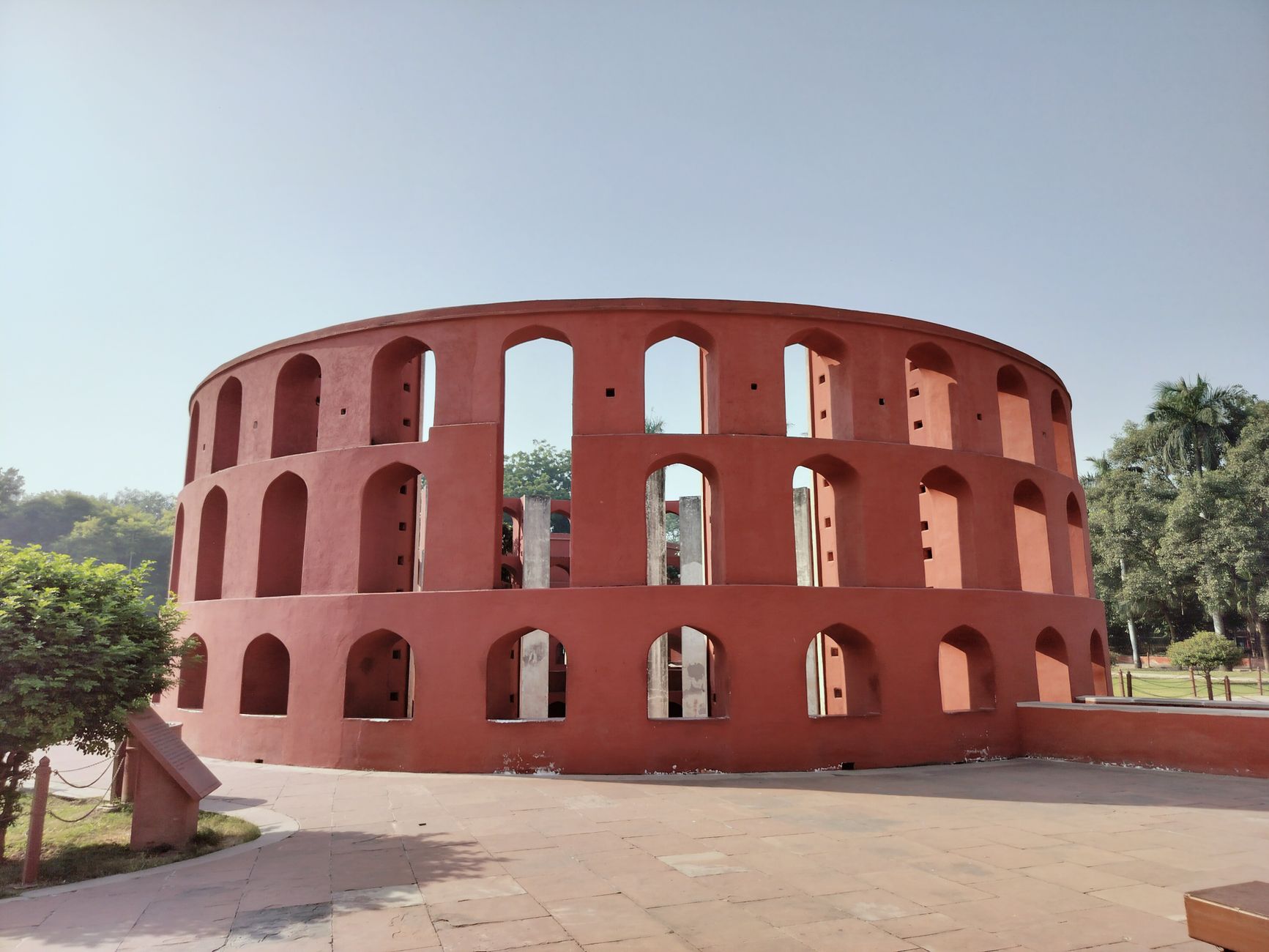
Jantar Mantar history reveals the fascinating journey of this iconic site. Once a symbol of India’s quest for knowledge and expression, it now stands as a relic of time.
The Origins of Jantar Mantar
The Jantar Mantar, an astronomical observatory built in the 18th century, stands as a testament to India’s rich scientific heritage. Located in several cities across the country, the most famous one is in Jaipur, constructed by Maharaja Jai Singh II in 1728. This remarkable structure was designed to advance the understanding of celestial movements and timekeeping.
Jai Singh II, a passionate astronomer and ruler, sought to create a space that combined architecture and astronomy. The Jantar Mantar is not merely a collection of instruments; it embodies the quest for knowledge during a time when India was a hub of scientific inquiry. Each instrument within the observatory served a specific purpose, from measuring the position of stars to predicting eclipses.
Despite its historical significance, the Jantar Mantar today faces the challenge of being perceived as a relic of the past. Visitors often marvel at its grandeur but may not fully appreciate its role in shaping India’s astronomical advancements. The structure, while magnificent, raises questions about how history is preserved and represented in modern society.
As one delves into the history of Jantar Mantar, it becomes evident that it is more than just an ancient site; it is a symbol of India’s intellectual pursuit and the enduring legacy of its past.
Significance in India’s History
The history of Jantar Mantar is not merely confined to its architectural prowess; it serves as a significant marker in India’s historical timeline. Built in the 18th century by Maharaja Jai Singh II, this astronomical observatory stands as a testament to India’s advanced understanding of astronomy and mathematics during that era. Its intricate instruments were designed to measure time, predict eclipses, and track celestial bodies, showcasing India’s rich scientific heritage.
Moreover, the Jantar Mantar has played an important role in various historical events. It was a center for learning and knowledge, attracting scholars and astronomers from different regions. The observatory facilitated a deeper understanding of the cosmos, which was crucial in a time when astrology was intricately woven into the fabric of society.
However, the significance of Jantar Mantar extends beyond its scientific contributions. It also symbolizes the cultural and intellectual pursuits of India during a period of great change. The observatory reflects the fusion of art and science, making it a unique relic of India’s past.
As time has passed, Jantar Mantar has become a reminder of both India’s glorious past and the challenges it faces in preserving its heritage. Today, it stands as a poignant reminder of the need to cherish and protect such historical sites that hold the essence of India’s identity, encapsulating the complex narrative of Jantar Mantar’s history.
Current State of the Landmark
Today, the Jantar Mantar stands as a fascinating yet dilapidated testament to India’s astronomical prowess. Once celebrated for its innovative instruments, this landmark’s current state raises questions about preservation and relevance in modern times. As visitors stroll through the site, they encounter a mix of architectural grandeur and signs of neglect.
The instruments, designed to observe celestial bodies, are still impressive, yet many show signs of wear and damage. The Jantar Mantar history reflects a time when these structures were at the forefront of scientific inquiry, but their functionality has diminished significantly.
Among the challenges facing the site are:
- Environmental wear, including pollution and weathering, which affects the integrity of the instruments.
- Inadequate maintenance, leading to structural issues that compromise the visitor experience.
- A lack of educational initiatives that could enhance public understanding of its historical significance.
Despite these challenges, local authorities have recently initiated efforts to improve visitor engagement and conservation. Events aimed at raising awareness about the importance of the Jantar Mantar have begun to take place, encouraging renewed interest. However, many argue that without a comprehensive conservation plan, the landmark risks fading further into obscurity, losing its value as a significant part of India’s rich scientific heritage.
Public Perception of Jantar Mantar
The public perception of Jantar Mantar has evolved significantly over the years, particularly as discussions around its historical context and relevance continue to unfold. Once celebrated as a marvel of astronomical ingenuity, the site is now often viewed as a relic of India’s past, with many questioning its current state and future.
Visitors to Jantar Mantar frequently express a mix of awe and disappointment. On one hand, they admire the intricate architecture and the scientific prowess displayed in the 18th century. On the other hand, many see it as a reminder of a bygone era that does not resonate with contemporary values or needs. The following points highlight prevalent sentiments:
- Historical Value: Some believe Jantar Mantar still holds significant educational value, representing India’s rich history of astronomy.
- Neglect and Decay: Critics argue that the site suffers from neglect, with inadequate maintenance diminishing its stature.
- Tourist Attraction: For others, it serves primarily as a tourist attraction, with little engagement in its deeper historical implications.
- Calls for Restoration: There is a growing demand for initiatives to restore Jantar Mantar to its former glory, emphasizing the need to preserve such important cultural heritage.
As discussions evolve, the Jantar Mantar history continues to spark debate on how we value and preserve our historical landmarks.
Jantar Mantar’s Role in Activism
Jantar Mantar, often perceived solely as an astronomical observatory, has played a significant role in activism throughout India’s history. This historical site has served as a backdrop for numerous protests and movements, reflecting the spirit of resistance and the quest for justice.
In recent years, activists have gathered at Jantar Mantar to voice their concerns on various issues affecting the nation, including:
- Environmental Protection: Campaigns focusing on climate change and conservation efforts have found a prominent platform here.
- Social Justice: Movements advocating for marginalized communities have used the site to raise awareness and demand action.
- Farmers’ Rights: Farmers have staged protests at Jantar Mantar, making their grievances against agricultural policies known to the public and government.
The historical significance of Jantar Mantar is intertwined with its role as a space for dialogue and dissent. Its legacy as a site of astronomical innovation is complemented by its use in social activism, showcasing how this remarkable structure has evolved through time. While some may regard it as merely a relic of the past, Jantar Mantar continues to be a vital symbol of India’s struggle for rights and recognition. Thus, the history of Jantar Mantar is not just about its construction and celestial instruments, but also about its enduring impact on civic engagement and activism in modern India.
Preservation Efforts for Historical Sites
Preservation efforts for historical sites like Jantar Mantar have become increasingly critical as the years go by. While the site is celebrated for its astronomical significance and cultural heritage, maintaining its integrity is an ongoing challenge. Various organizations and governmental bodies have initiated programs aimed at restoring and preserving the structures at Jantar Mantar, ensuring that future generations can appreciate its importance.
Efforts include:
- Restoration Projects: Specialized teams of conservators are working to repair and maintain the astronomical instruments, which have weathered time and environmental factors.
- Awareness Campaigns: Educational programs are being developed to inform the public about the significance of Jantar Mantar, emphasizing its role in India’s rich history.
- Community Involvement: Local communities are encouraged to participate in preservation activities, fostering a sense of ownership and responsibility towards this historic site.
- Government Initiatives: The central and state governments are collaborating on policies that prioritize the protection of Jantar Mantar as a national heritage site.
Despite these efforts, challenges remain, including funding constraints and the need for more robust regulatory frameworks. The preservation of Jantar Mantar is crucial not only for its historical value but also for its role in connecting people to India’s scientific legacy.
Visitor Experience at Jantar Mantar
Visiting Jantar Mantar offers a unique glimpse into the astronomical advancements of ancient India, yet it also presents a complex experience for modern visitors. Many arrive with expectations shaped by the site’s rich history, eager to explore its impressive structures and learn about the astronomical instruments that once played a vital role in India’s scientific achievements.
However, the reality often contrasts sharply with these expectations. Once a beacon of knowledge, the site now struggles with maintenance issues and inadequate visitor facilities. Some tourists express disappointment over the lack of informative signage and guided tours that could help them appreciate the full significance of the various instruments, such as the Samrat Yantra and the Jai Prakash.
Moreover, the growing number of visitors has led to overcrowding, making it difficult to fully immerse oneself in the experience. Despite these challenges, many still find value in witnessing the grandeur of Jantar Mantar and its historical context. They engage in discussions about its history, reflecting on how this remarkable site symbolizes both India’s past achievements and its current struggles with preservation.
- Visitors highlight the architectural beauty of the instruments.
- Many express a desire for more educational resources.
- Some appreciate the site’s role in India’s scientific legacy.
Future of Jantar Mantar
The future of Jantar Mantar stands at a crossroads, balancing its historical significance with the challenges of modernity. As discussions around the Jantar Mantar history unfold, stakeholders are increasingly aware of the need for thoughtful preservation and innovative engagement strategies.
There are several key areas that could shape the future of this iconic site:
- Restoration Projects: Continued efforts to restore and maintain the astronomical instruments will play a crucial role in preserving the site’s integrity and educational value.
- Public Engagement: Enhancing visitor experiences through interactive exhibits and guided tours can help foster a deeper appreciation for the rich history of Jantar Mantar.
- Community Involvement: Encouraging local communities to participate in preservation initiatives can promote a sense of ownership and responsibility towards this historical landmark.
- Education and Research: Collaborations with academic institutions can facilitate research projects focused on the scientific and cultural relevance of Jantar Mantar, ensuring that its legacy is documented and celebrated.
- Technology Integration: Utilizing augmented reality and mobile applications can provide visitors with immersive experiences that connect them to the past while catering to modern expectations.
As Jantar Mantar navigates its future, it is essential that its history is honored and leveraged to inspire generations to come.
The Jantar Mantar history is often overshadowed by its architectural grandeur, yet it reveals a complex narrative of India’s astronomical ambitions. Understanding Jantar Mantar history allows us to appreciate the cultural significance it held during its time, despite its controversial legacy today.
Photo by Dev Datt on Pexels


2 thoughts on “Jantar Mantar: The Worst Relic of India’s Past Revealed”