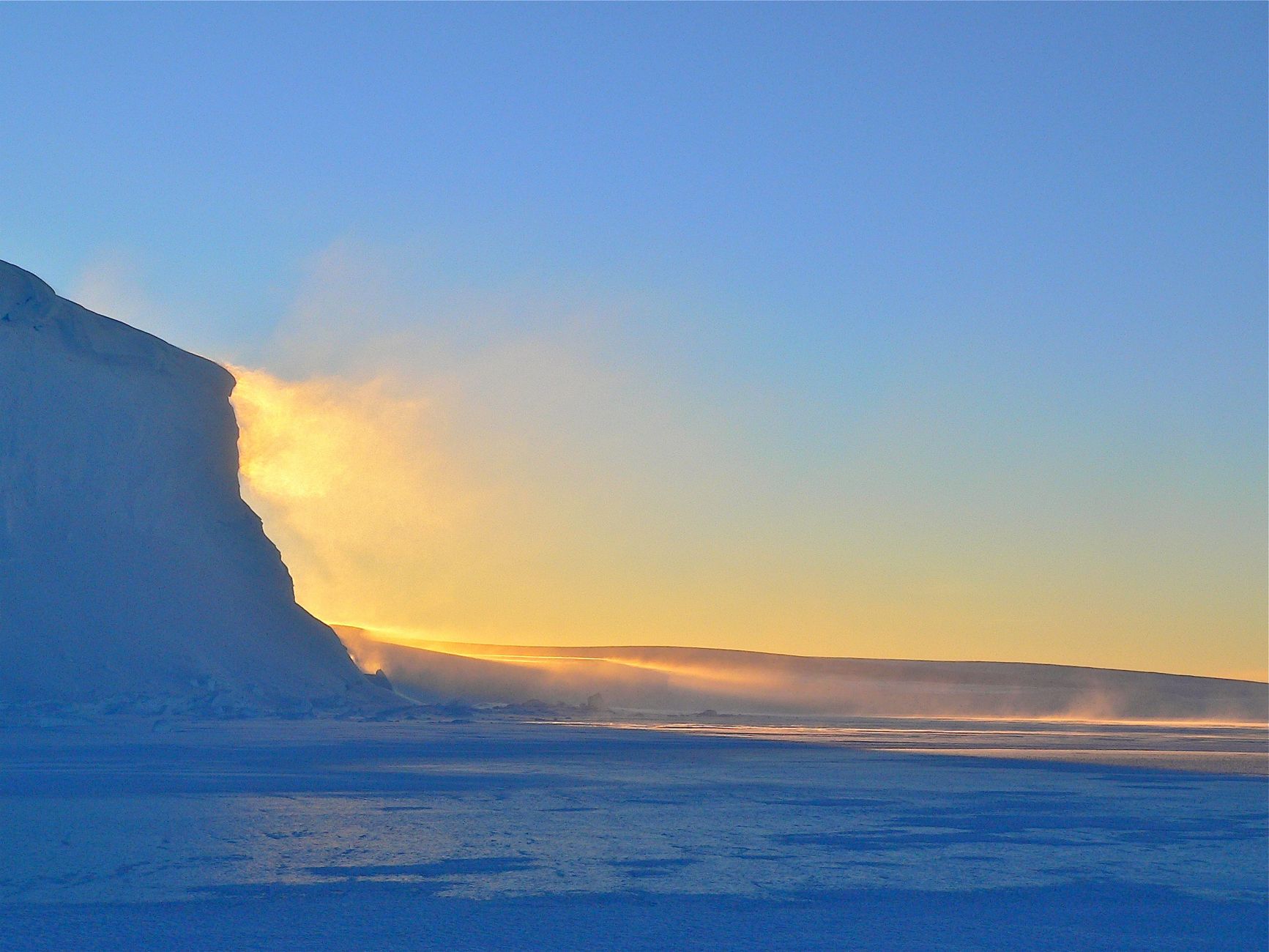
The Antarctic ozone hole has grown to an alarming 25 million km², highlighting the accelerating deterioration of the ozone layer. This increase raises serious concerns about environmental and health impacts worldwide.
Understanding the Antarctic ozone hole
The Antarctic ozone hole has become a significant environmental concern, particularly as recent measurements indicate a troubling expansion. This year, the ozone hole reached an alarming size of 25 million km², marking the worst growth recorded to date. The phenomenon occurs during the Southern Hemisphere’s spring when sunlight returns to the polar region, triggering the release of ozone-depleting chemicals.
Understanding the Antarctic ozone hole involves recognizing the role of human-made substances. In particular, chlorofluorocarbons (CFCs) have been identified as major contributors to ozone depletion. As these chemicals ascend into the stratosphere, they interact with ultraviolet radiation, leading to the breakdown of ozone molecules.
Efforts to mitigate this issue have been made through international agreements such as the Montreal Protocol, which aims to phase out the use of CFCs. However, the current data suggests that despite these efforts, the Antarctic ozone hole continues to expand, highlighting the ongoing challenges in addressing global environmental issues.
Recent changes in ozone levels
Recent observations indicate that the Antarctic ozone hole has expanded significantly, reaching an alarming size of 25 million km². This marks the worst growth recorded in recent years, raising concerns among scientists and environmentalists alike. The increase in size is attributed to several factors that affect ozone levels in the stratosphere.
Key factors contributing to the recent changes include:
- Rising levels of greenhouse gases: The accumulation of these gases can lead to a disruption in the natural balance of ozone production and destruction.
- Seasonal variations: The Antarctic spring brings colder temperatures that enhance the chemical reactions responsible for ozone depletion.
- Increased ultraviolet radiation: A larger ozone hole allows for more UV rays to penetrate the atmosphere, posing risks to both human health and ecosystems.
As the Antarctic ozone hole continues to grow, understanding these changes becomes crucial in developing strategies to mitigate further environmental impact.
Impact of ozone depletion on health
The expansion of the Antarctic ozone hole has significant implications for public health worldwide. As the ozone layer continues to deplete, increased levels of ultraviolet (UV) radiation reach the Earth’s surface. This surge in UV exposure can lead to various health issues, including:
- Skin cancer: Higher UV levels are linked to an increased risk of melanoma and other skin cancers.
- Cataracts: Prolonged exposure to UV radiation can cause cataracts, leading to vision impairment.
- Weakened immune system: Elevated UV exposure can compromise the immune system, making individuals more susceptible to infections.
- Effects on skin: Beyond cancer, increased UV can cause premature aging and other skin disorders.
Moreover, the impact of ozone depletion is not limited to human health; it also poses risks to marine ecosystems and agricultural productivity. As the Antarctic ozone hole reaches a worrying size of 25 million km², it underscores the urgent need for global action to address this environmental crisis.
Global responses to ozone layer issues
The alarming expansion of the Antarctic ozone hole has prompted a surge in global responses aimed at addressing the pressing issue of ozone layer depletion. Governments, scientists, and environmental organizations are collaborating to implement strategies that mitigate the harmful effects of this phenomenon.
One of the most significant international efforts is the Montreal Protocol, which was established in 1987 to phase out substances responsible for ozone depletion. This agreement has seen widespread compliance, leading to a gradual recovery of the ozone layer, although challenges remain.
In addition, scientists are advocating for increased research into alternative substances and technologies that can further reduce the impact of human activities on the atmosphere. Public awareness campaigns are also vital in educating citizens about the importance of protecting the ozone layer.
- Increased funding for research on ozone-friendly technologies
- Strengthened regulations on harmful emissions
- Global collaboration to monitor ozone levels
The need for decisive action is underscored by the recent growth of the Antarctic ozone hole, which has reached an unprecedented size of 25 million km².
Scientific studies on ozone recovery
Recent scientific studies have highlighted the complexities surrounding the recovery of the ozone layer, particularly in relation to the Antarctic ozone hole. Research indicates that while there have been positive signs of recovery, the recent expansion of the ozone hole to 25 million km² raises concerns about the pace of this recovery.
Key findings from these studies include:
- Long-term monitoring: Continuous satellite observations show fluctuations in ozone levels, with some areas demonstrating a gradual increase in ozone concentrations.
- Climate change factors: The interactions between ozone recovery and climate change are critical, as warming temperatures can influence stratospheric conditions and affect ozone levels.
- Future projections: Models suggest that while the ozone layer may recover by the middle of the century, the acceleration of the Antarctic ozone hole could complicate these predictions.
Overall, ongoing research remains vital to understanding the dynamics of the Antarctic ozone hole and ensuring effective measures for recovery are implemented.
Historical data on ozone hole growth
Historical data on the Antarctic ozone hole reveals alarming trends in its growth over the past few decades. Initially, the ozone hole was first identified in the early 1980s, measuring approximately 1 million km². Since then, the size has escalated drastically, with recent measurements indicating a record growth to 25 million km².
This significant increase can be attributed to various factors, including the rise in chlorofluorocarbons (CFCs) and other ozone-depleting substances released into the atmosphere. In the 1990s, global efforts to curb these emissions began to take shape through international agreements such as the Montreal Protocol. However, the ozone hole has continued to expand, indicating that recovery may take longer than anticipated.
The historical data also show seasonal variations, with the hole reaching its maximum size during the Southern Hemisphere’s spring. Ongoing monitoring is crucial, as understanding the growth patterns of the Antarctic ozone hole can help scientists predict future changes and assess the effectiveness of global environmental policies.
Future projections for the ozone layer
Future projections for the ozone layer indicate ongoing challenges despite international efforts to mitigate ozone depletion. Scientists predict that the Antarctic ozone hole, which has reached alarming dimensions, could take several decades to recover fully.
According to climate models, the recovery of the ozone layer is contingent upon sustained adherence to the Montreal Protocol and the reduction of ozone-depleting substances. However, a few key factors could influence the timeline:
- Climate Change: Increasing global temperatures may impact stratospheric conditions, potentially hindering recovery efforts.
- Natural Variability: Fluctuations in atmospheric conditions could lead to temporary increases in ozone depletion.
- Human Activity: Illegal production and use of banned substances pose a threat to the progress made thus far.
While there is optimism concerning the long-term recovery of the ozone layer, the recent growth of the Antarctic ozone hole highlights the need for continued vigilance and global cooperation.
What can be done to protect the ozone?
The alarming expansion of the Antarctic ozone hole has raised concerns about the future of our planet’s atmosphere. To combat this issue, several actions can be taken to protect the ozone layer effectively.
First, it is crucial to adhere to international agreements such as the Montreal Protocol, which successfully phased out many ozone-depleting substances. Continued support for these regulations is essential to ensure progress in ozone recovery.
Second, raising public awareness about the importance of the ozone layer can encourage individuals and businesses to reduce their use of harmful chemicals. Simple changes, such as choosing products free from hydrochlorofluorocarbons (HCFCs), can collectively make a significant difference.
Additionally, supporting research initiatives aimed at understanding and monitoring the Antarctic ozone hole is vital. This data can inform effective policies and technological innovations to further protect the ozone layer.
By taking these steps, we can contribute to the preservation of the ozone layer and mitigate the effects of ozone depletion on our environment and health.
Photo by Pixabay on Pexels
Where this came from
Innovation News Network · Antarctic ozone hole
Related stories
Virgo Horoscope September 16: Best Insights for Your Day · Intermittent fasting diabetes: The Right Approach for Management · Pediatric cancer hospitals: Best rankings for St. Jude’s success
2 thoughts on “Antarctic ozone hole: Worst growth recorded at 25 million km²”